Home › Services
Chain link fences in Indianapolis, built to stay tight for decades
Chain link is what most people around Indianapolis picture for a dog run, a side-yard gate or a long back lot line that simply needs to be closed off. It will never win a beauty contest, but it is honest material: steel wire woven into a diamond mesh and hung on a pipe frame, and it can stand for a generation when every part is matched to the job. Two fences that look identical from the street can differ wildly in wire thickness, coating and frame weight. This page walks through gauge, mesh, coatings, framework, heights, slats, dog defense and gates, which should make any estimate easier to judge line by line. Once you know roughly what the run needs, a short note and a picture or two on the contact page gets the ball rolling.
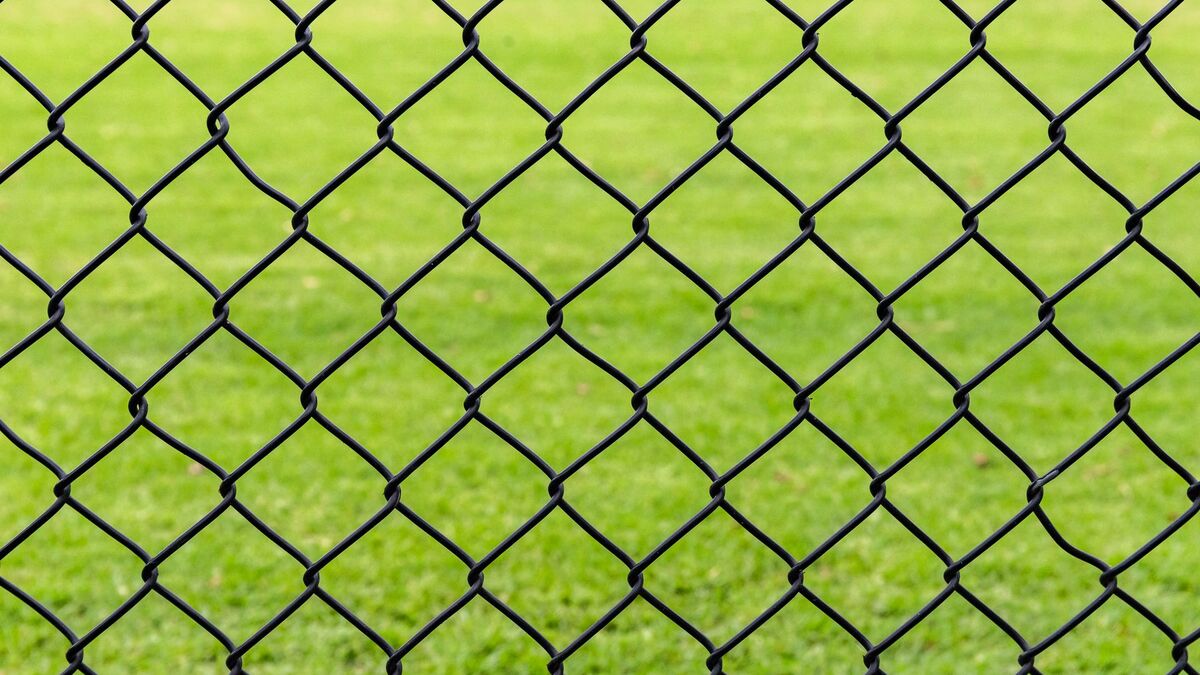
Wire gauge is the spec that matters most and the one buried deepest in a quote
Gauge describes the thickness of the steel wire, and the scale runs backward: a smaller number means heavier wire. Big-box rolls sold for weekend projects are often light wire that dents when a dog hits it and sags after a few seasons. Heavier wire holds its diamond shape, resists climbing kids and large dogs, and keeps tension far longer.
On coated fabric, watch for a sleight of hand. Vinyl-coated wire is sometimes described by its finished thickness, plastic included, which makes it sound heavier than it is. Ask for the core wire gauge, meaning the steel inside the coating. That is the number that carries the load.
- Light gauges: fine for marking a garden, poor for dogs or anything that gets leaned on.
- Middle gauges: the common residential choice for backyards with average use.
- Heavy gauges: the right call for big dogs, ball-playing kids, and runs along alleys where bins bump the fence.
Mesh size: why most residential diamonds are about two inches
The diamond opening in typical residential fabric is roughly two inches across. That size balances strength, visibility and material use, and it is what most yards in central Indiana have. It is also big enough for a small dog to push a snout through, and big enough for a child to use as a ladder.
Smaller mesh, sometimes sold as mini-mesh, weaves the wire into tighter diamonds. It is far harder to climb and keeps toy breeds and rabbits where they belong. The tradeoff is more wire per foot, more weight on the frame and a higher material cost.
Galvanized, aluminized or vinyl-coated: picking the finish
Bare steel rusts within months outdoors, so every chain link fabric carries a protective coating. The coating, more than any other single factor, decides how the fence looks in fifteen years.
- Galvanized after weaving: the wire is woven first and then dipped in zinc, so the coating also seals the twists and knuckles. Generally the more durable galvanized option.
- Galvanized before weaving: zinc goes on first and the weaving can scuff it at the bends, which is where rust starts. Serviceable on light-duty jobs.
- Zinc weight: heavier zinc lasts longer in wet clay and sprinkler spray. Ask which class is being quoted.
- Vinyl-coated: PVC fused over galvanized wire, usually black, sometimes green or brown. Black disappears against a lawn and trees, which is why many associations that frown on plain silver chain link will accept it.
The framework: terminal posts, line posts and top rail
Terminal posts are the anchors. Every end, corner and gate opening gets one, and they are a larger diameter than the posts in between because they carry the full pull of the stretched fabric. Line posts mostly hold the fabric up rather than holding it tight. The top rail ties the line posts together and keeps the top edge straight; rail sections slip together with sleeves or swedged ends that let the steel move through Indiana summers and winters.
Pipe wall thickness matters as much as diameter. Two posts with the same outside size can have very different walls, and the thin one bends where a snowblower clips it. Black systems should have framework coated to match, over galvanizing rather than bare steel.
- Bottom tension wire: a heavy wire stretched along the base and tied to the fabric so the edge cannot be pushed out.
- Bottom rail: a second pipe at the base, stiffer and better for dogs, at extra cost.
- Post caps: dome caps on terminals and loop caps on line posts keep water out of the pipe.
Tension bands, tension bars and braces keep the mesh drum-tight
At every terminal post, a flat steel tension bar is threaded vertically through the last row of diamonds. Tension bands, clamp-style straps bolted around the post, grip that bar and hold the fabric's edge against the post. Brace bands hold the rail end cups that receive the top rail. Along line posts and the top rail, tie wires wrap the fabric to the frame; heavier steel ties hold better than thin aluminum ones where kids or dogs push.
Corners and long runs often get a brace rail between the terminal and the first line post, with a diagonal truss rod tightened against it. That brace keeps the terminal from tipping toward the run under load. Skipping braces is a quiet way a low quote saves money, and it shows up later as corner posts leaning inward.
How the fabric is stretched, and why some fences go slack
Stretching separates a crisp fence from a baggy one. The installer works from one terminal post to the next, pulling the mesh evenly so the diamonds stay square.
- The fabric is unrolled along the outside of the frame and fastened at the first terminal with a tension bar and bands.
- A stretcher bar is laced through the fabric near the far terminal and pulled with a come-along or fence puller.
- Tension builds until the mesh is taut but not distorted into narrow slots.
- Excess fabric is removed by unweaving a single picket wire, and a second tension bar locks the end to the terminal.
- Tie wires go on only after tension is set, never before.
Fabric heights, and who decides what your yard can have
Chain link fabric comes in standard roll heights, with four, five and six feet the usual residential choices. Four feet reads as a boundary and keeps in most medium dogs. Taller fabric suits jumpers, climbers and rear yards along busy roads.
What you may install is a separate question. The city, town or township zoning code for your address sets maximum heights, setbacks and sight rules near corners and driveways, and many homeowner associations add their own limits, sometimes banning uncoated chain link outright. Check both before any material is ordered. In younger subdivisions in Avon or Greenwood, the association rules are often stricter than the city's.
Slats for screening, and the extra load they put on the frame
Slats slid into the diamonds turn an open fence into a screen. Tubular slats give partial coverage, winged slats close more of the gap, and hedge-look slats imitate shrubbery. Slat color fades in full sun, and cracked slats can be swapped one at a time.
The catch is wind. Open mesh lets a storm pass through; slatted mesh behaves like a sail. Central Indiana gets severe thunderstorms with straight-line gusts, and a slatted run on a light frame will lean or fold. Screening needs heavier posts, closer line post spacing and deeper footings. When full privacy is the real goal, a wood privacy fence usually fits better.
Keeping dogs in: climbing, digging and gaps at the bottom
Chain link is the default dog fence around Indianapolis: it is strong, it lets the dog see out, and it does not chew. A determined dog still tests a few weak points.
- The bottom gap: clay settles and washes along a fence line. A bottom wire or rail keeps the edge from being shoved out, and the gap should start small.
- Digging: a dig guard is wire mesh fastened to the bottom of the fabric and buried in an L toward the yard. A narrow concrete mow strip does the same job and eases trimming.
- Climbing: taller fabric and tighter mesh discourage climbers. Ask for knuckled selvage on both edges, which folds the cut wire ends over so nothing sharp faces a pet or child.
- Gates: dogs learn to nose open loose latches. A fork latch with a padlock hole closes that weak spot.
Chain link gates for people, mowers and trailers
A gate is its own pipe frame covered in matching fabric and hung on the heaviest posts in the fence. Walk gates fit a person and a wheelbarrow; wider single gates take a riding mower; double drive gates open for a trailer or a dumpster. Double gates use a drop rod that falls into a ground keeper to hold one leaf while the center latch catches the other.
Ask how the gate frame corners are joined. Welded corners stay square longer than corners held only by bolted fittings. Gate posts should be heavier and set deeper than ordinary terminals, because a gate levers its weight on them with every swing. If a gate already drags, the fence repair page covers the fix.
What drives the cost and what a complete chain link proposal lists
Chain link is usually the least expensive way to enclose a yard, but light-duty and heavy-duty jobs land far apart. The count of corners, ends and gates matters a lot, because each adds a heavy post, fittings and bracing. Gauge, coating, height, slats, root-filled ground, tear-out and tight access between houses all move the number, with the final figure set only once the contractor has walked the property. Post depth and the build sequence are covered on the fence installation page.
- Fabric: height, mesh size, core wire gauge, coating type and zinc class.
- Framework: post diameters and wall thickness, top rail size, bottom wire or bottom rail.
- Bracing and fittings: corner braces and truss rods, tension bands, tie type and spacing.
- Gates: count, widths, frame construction, hinges, latches and drop rods.
- Extras and approvals: slats, dig guard, old fence removal, and who handles the association and permit.
Chain link fences in Indianapolis — common questions
Which wire thickness holds up to a large, strong dog?
For a large or persistent dog, go with heavy wire rather than the light rolls sold for garden borders. Heavier wire keeps its diamonds when a dog jumps against it and does not stretch into a pocket the dog can work at. Pair it with a bottom rail and a latch the dog cannot nudge open. If the dog is a jumper, height matters more than gauge, so confirm what zoning and any association allow first.
Does black vinyl-coated chain link last longer than galvanized?
It can, because the steel carries a zinc layer and then PVC on top, so water has to get through two barriers before rust starts. The coating is also kinder to hands and paws. Its weak point is physical damage: a trimmer or mower blade that nicks the vinyl exposes the wire at that spot. Keep a trimmed strip along the base and black chain link tends to look good for a long time.
Can privacy slats be added to an existing chain link fence?
Usually, as long as the fence is still tight and the posts are solid. The bigger question is whether the frame can handle wind once the mesh is filled in. Older fences with light line posts and no corner bracing may lean after the first strong storm. Have someone check post size, spacing and plumb first, and measure the mesh, because slats are sold to fit a specific diamond and fabric height.
How long does a chain link fence last?
A heavy-gauge fence with a quality finish, braced corners and properly set posts commonly stands for several decades. Light wire with thin zinc on an unbraced frame can look tired within a handful of years. What shortens life here is moisture: posts sitting in waterlogged clay, sprinklers hitting the same section daily, and soil piled against the fabric. Keep mulch off the mesh and watch for corner posts starting to tip.
Is chain link cheaper than a wood privacy fence?
In most yards, yes, because the material is lighter, posts can sit farther apart and there are no boards to hang. The gap narrows once you add heavy wire, black coating on fabric and frame, tall fabric, slats and several gates. Chain link also skips the periodic staining wood needs. The fairest comparison comes from having both options priced for the same layout after a contractor walks the property.
Do I need permission to put up chain link in my backyard?
Possibly from two places. Your city, town or township may require a permit and will have rules about height, placement near the lot line and visibility at corners. A homeowner association may limit chain link color, height or location, or rule it out. Get association approval in writing and confirm the permit question for your address before ordering anything. Indiana 811 also has to mark utilities before posts go in.
Talk through your site
Start with the address, what you want done, and a few photographs of the area, including anywhere water sits after a heavy rain.
Related work
Fence Installation
New fences on central Indiana clay, posts below frost, permits, association approval and gates.
Fence Repair
Leaning and heaved posts, storm damage, rotted boards, torn chain link and dragging gates.
Wood Privacy Fences
Treated pine and cedar privacy fencing, styles, post spacing and the staining schedule.
Vinyl Fences
Vinyl privacy and picket fencing, how to judge quality and how it holds up through winter.
Aluminum Fences
Ornamental aluminum for pools and front yards, grades, gates and open-style rules.
Across the metro
Greenwood
South-side suburb with large subdivisions, association rules and slow-draining clay.
Plainfield
West-side growth with new builds on graded lots and open, windy ground.
Avon
Fast-growing west-side township with young subdivisions, pools and dog owners.
Beech Grove
Small city of older homes on tight lots with alleys and aging fences.